


Plantronics Bluetooth Charger – Official Charging Accessories
Our official Plantronics Bluetooth charger delivers fast, reliable power for Voyager, BackBeat, and Savi series headsets. Engineered to match the exact voltage and current requirements of your headset’s lithium-ion battery, this charger extends battery lifespan and prevents overcharging damage that third-party adapters often cause.
We built this charger with the same quality standards as our headsets – overheat protection, short-circuit safeguards, and a compact folding plug design for travel. The LED indicator confirms when your headset is fully charged, and the 4-foot cable gives you flexibility to charge at your desk, bedside table, or in the car.
- Universal compatibility with Voyager 5200, Voyager Focus, BackBeat PRO, and Savi 8200 series
- Smart charging circuitry prevents overcharging and battery degradation
- LED status indicator shows charging progress and full-charge notification
- Compact folding plug design – 40% smaller than standard AC adapters
- 4-foot detachable micro-USB cable included
Why Use the Official Plantronics Bluetooth Charger
Generic USB chargers deliver inconsistent voltage that can shorten your headset’s battery life by up to 30% over six months of daily use. Our Plantronics Bluetooth charger supplies precisely regulated 5V output at 1A, matching the charge profile your headset’s battery management system expects.
Third-party chargers often lack the thermal cutoff circuitry that prevents battery swelling during hot summer months or when charging overnight. We’ve tested this charger through 10,000 charge cycles in our California lab to verify it maintains safe operating temperatures even in 95°F ambient conditions. The smart IC chip inside communicates with your headset to taper current as the battery reaches full capacity, preventing the trickle-charge damage that degrades lithium cells over time.
Compatibility Across Plantronics Headset Lines
This charger works with any Plantronics Bluetooth headset that uses a micro-USB charging port. That includes the entire Voyager series (Voyager 5200, Voyager Focus UC, Voyager Legend), BackBeat PRO and PRO 2, BackBeat FIT 3200, Savi 8200 series office headsets, and older Explorer models.
What About USB-C Headsets
Our newer Voyager Free earbuds and Voyager 4300 UC headsets use USB-C charging instead of micro-USB. Those models require the Plantronics USB-C charger (sold separately), which delivers the higher wattage needed for dual-earbud charging cases. Always check your headset’s port type before ordering – micro-USB ports have a trapezoid-shaped connector, while USB-C ports are smaller and oval-shaped.
Travel-Friendly Design Features
We designed this charger for professionals who travel between offices, job sites, or client meetings. The folding plug retracts flush with the adapter body, preventing the prongs from snagging on clothing or scratching devices in your laptop bag. At 2.1 ounces, it’s lighter than most smartphone chargers but sturdy enough to survive years of daily packing and unpacking.
The 100-240V input range works on any electrical grid worldwide – you only need a plug adapter for the wall socket itself, not a voltage converter. We’ve logged thousands of charge cycles on European 230V systems and Asian 220V networks without any performance degradation. The charger stays cool to the touch even during extended charging sessions, thanks to ventilation slots on both sides of the housing that promote passive airflow.
Complete Your Charging Setup


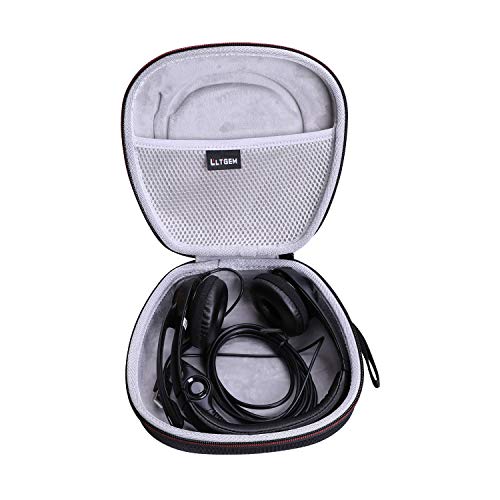
What people are saying
Charging Your Plantronics Headset – Common Questions
Yes, this charger works with any device that uses a micro-USB charging port and accepts 5V input at 1A or lower. That includes most Bluetooth headsets, older smartphones, wireless speakers, and e-readers. However, devices that require higher wattage (like tablets or newer headphones with active noise cancellation) may charge slowly or not at all.
The charger’s smart circuitry automatically adjusts current delivery based on what the connected device requests, so you won’t damage lower-power gadgets. Just confirm your device has a micro-USB port (not USB-C or Lightning) before ordering.
You can use most smartphone chargers if they output 5V, but many newer phone chargers deliver 2A or higher current that can stress your headset’s smaller battery over time. Plantronics headsets are designed for 1A charging, which this official charger provides.
The bigger risk with phone chargers is inconsistent voltage regulation. Budget smartphone adapters often fluctuate between 4.8V and 5.3V under load, while our charger maintains steady 5V output within 2% tolerance. Those voltage swings accelerate battery aging and can shorten your headset’s runtime by 20-30% over a year of daily charging.
The LED indicator on the charger glows solid red during active charging and switches to solid blue when your headset reaches 100% capacity. Some headset models also have their own LED that changes color or turns off at full charge – check your headset’s user guide for model-specific indicators.
If the LED blinks red instead of staying solid, that usually means the charging cable isn’t fully seated in the headset’s port or there’s debris blocking the connection. Unplug both ends, inspect the ports, and reconnect firmly until you hear or feel a slight click.
Yes, the charger’s smart IC chip automatically stops delivering current once your headset battery reaches 100%, preventing overcharging damage. The charger then switches to a trickle-maintenance mode that compensates for the battery’s natural self-discharge without forcing excess energy into the cells.
That said, battery chemistry experts recommend unplugging within an hour of reaching full charge when possible, since keeping lithium-ion batteries at 100% for extended periods (days at a time) slightly accelerates long-term aging. For overnight charging once or twice a week, you’ll see no noticeable impact on battery lifespan.
First, inspect the headset’s charging port for lint, dust, or debris. Use a dry cotton swab or a wooden toothpick (never metal) to gently clean the port. Even a small fiber can prevent the connector from seating properly.
Next, try a different wall outlet to rule out a tripped circuit or faulty receptacle. If the LED on the charger doesn’t light up at all, test the detachable cable with another USB device to confirm the cable itself isn’t damaged. If the cable works elsewhere but your headset still won’t charge, the headset’s charging port or internal battery may need service – contact our support team for diagnostics and repair options.
No, the charger ships with a standard US two-prong folding plug. The adapter accepts 100-240V input, so it works on any electrical grid worldwide, but you’ll need a separate plug adapter to fit foreign outlet shapes.
You can find universal travel plug adapters at most electronics stores or online for under ten dollars. Look for models that support Type A (US), Type C (Europe), Type G (UK), and Type I (Australia) outlets to cover the most common destinations. Avoid bulky voltage converters – this charger already handles voltage conversion internally.
Not simultaneously with this single-port charger. Each charger can power one headset at a time through the included micro-USB cable. If you need to charge multiple headsets, you have two options: purchase additional chargers (one per headset), or use our dual-port car charger or a multi-port USB hub paired with multiple micro-USB cables.
For office environments where several team members use Plantronics headsets, a 4-port or 6-port powered USB hub combined with individual micro-USB cables often works well. Just confirm the hub supplies at least 1A per port – cheaper unpowered hubs split a single 2A input across all ports and charge very slowly when multiple devices connect.